Software · Desktop app
Codon Atlas
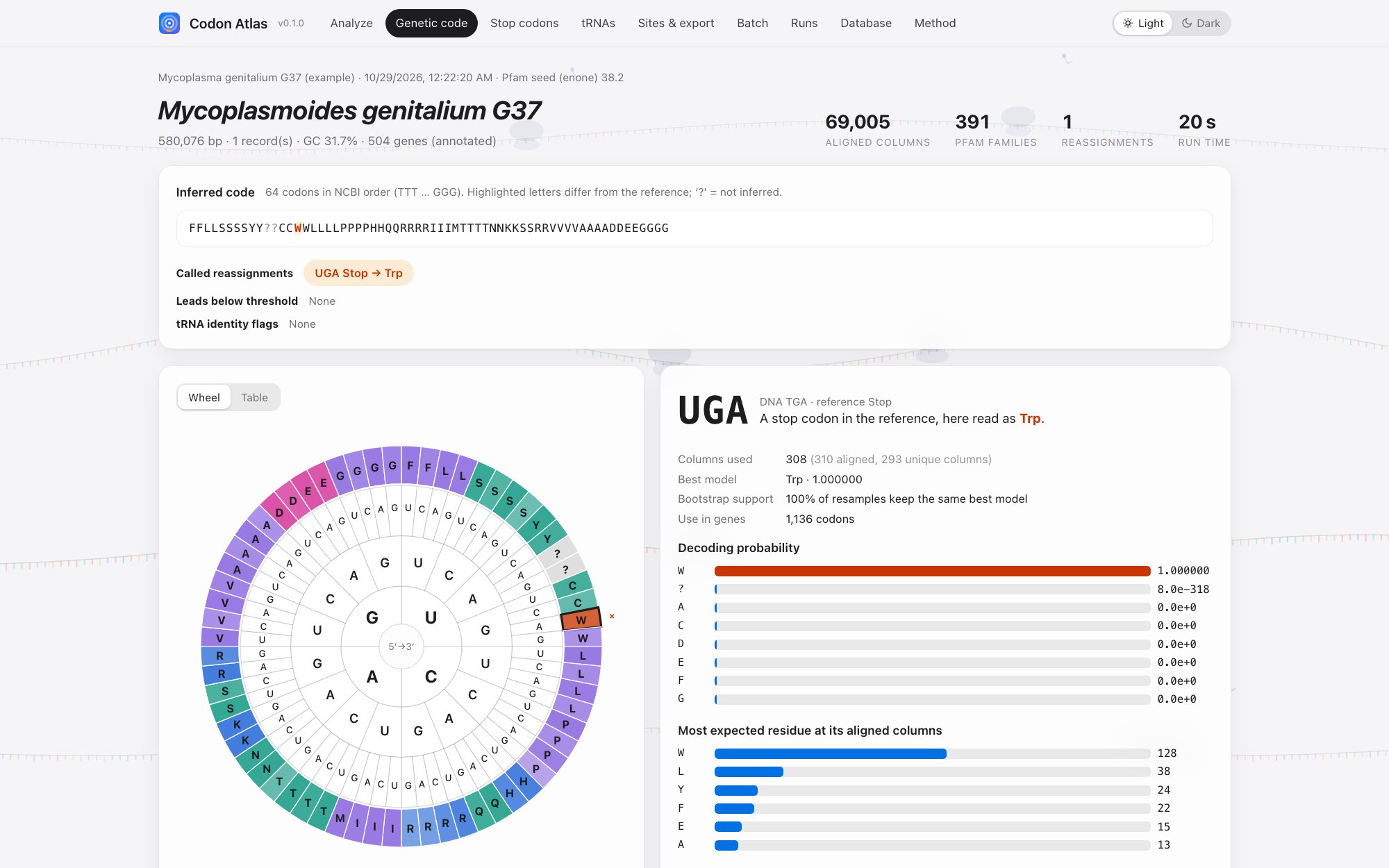
Predicts the genetic code from a genome sequence and searches it for alternative decoding. It aligns a six-frame translation to Pfam protein families and, for each of the 64 codons, works out which amino acid the conserved positions it lands on expect (the Codetta method), then flags reassigned codons, stop codons inside conserved domains, and the tRNAs that could read each codon, lists every affected site in the genes, and exports the protein databases needed to test a reassignment by proteomics.
What it does
- Decoding probability for every one of the 64 codons, with bootstrap support and below-threshold leads for rare codons
- Codon wheel and table, with the Pfam families and expected residues behind each call
- Stop codons inside conserved domains: stop-codon reassignments, selenocysteine and pyrrolysine candidates, readthrough
- tRNA genes with the codons each anticodon can read and identity elements for arginine tRNAs
- Every affected site in the genes, and a standard plus alternative protein database ready for a proteomics search
- Batch screens of many genomes, saved runs, and tables and an HTML report
Where it runs
A desktop app. Pfam is downloaded once; after that genomes are analysed on your computer (about a minute for a bacterial genome).