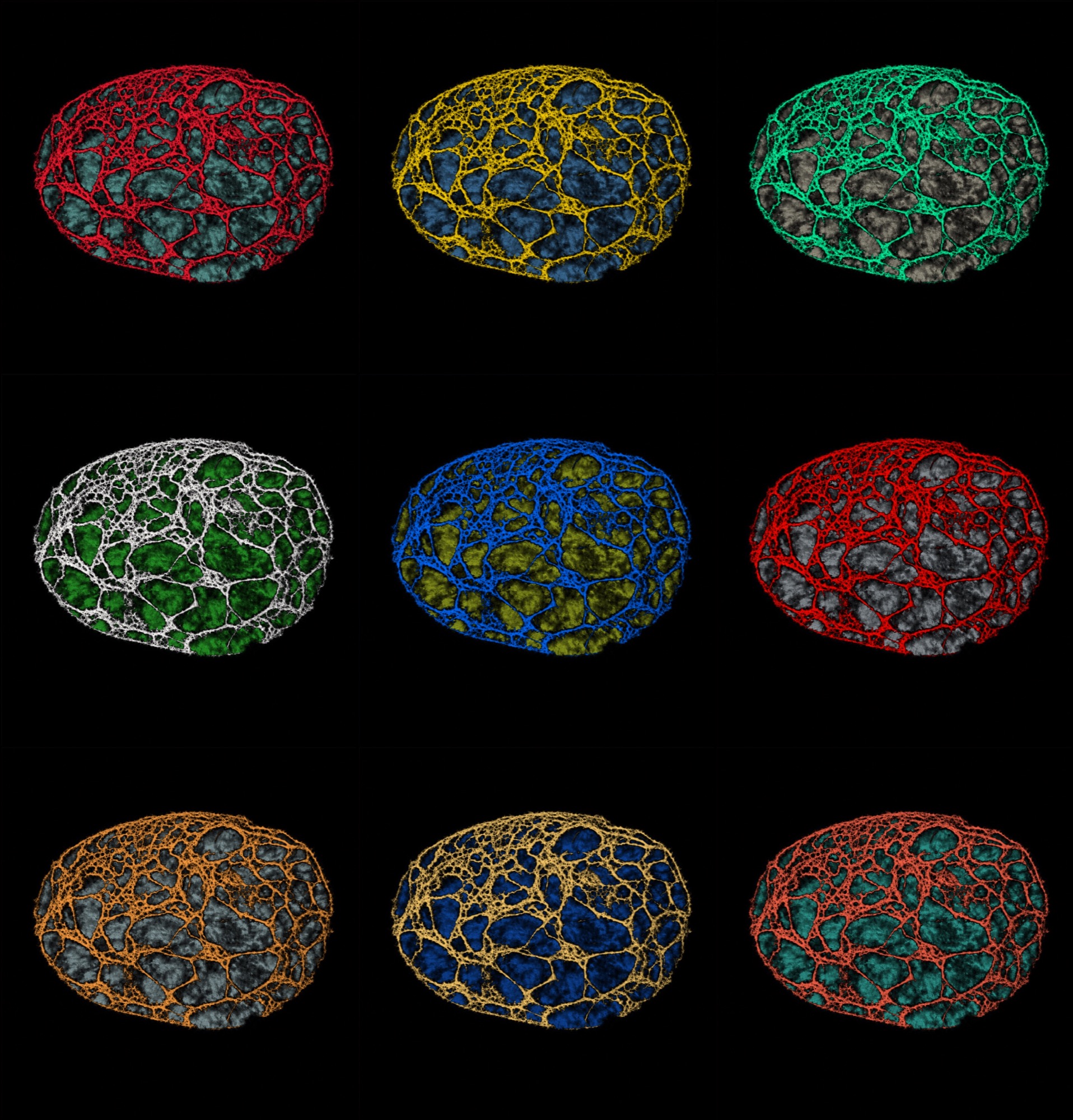
Lamin meshwork surrounding a nucleus. Cover artwork derived from confocal microscopy.
16+years in research
20+peer-reviewed publications
200K+compounds screened
500+cell lines developed
Research focus
Aging begins with changes we can see, measure, and test.
My work crosses scales—from nanometer-scale protein networks to the progressive loss of cells in the arterial wall.
01
Nuclear architecture
When the cell’s protective scaffold breaks down
The nucleus is wrapped in a protein meshwork that protects DNA and helps cells withstand stress. I study how progerin distorts this scaffold, creating weak points that can rupture.
Scientific detail
High-resolution and live-cell imaging reveal how progerin reorganizes lamin A and lamin B1 meshworks, drives nuclear membrane blebs and ruptures, and perturbs nuclear mechanics.
02
Vascular aging
Why arteries are especially vulnerable
In progeria, the smooth muscle cells that reinforce arteries are progressively lost. I investigate why these cells fail and what their vulnerability can teach us about cardiovascular aging.
Scientific detail
Patient-derived cells, mouse models, iPSC systems, tissue microdissection, and multi-omics connect progerin accumulation and mechanical stress to smooth-muscle-cell death and arterial pathology.
03
Intervention science
Turning mechanisms into measurable tests
Understanding a failure is only the beginning. I build models and assays that let research teams test potential interventions and decide what is worth advancing.
Scientific detail
My work spans genetic and pharmacological perturbation, phenotypic screening, disease-model development, quantitative imaging, and orthogonal mechanism-of-action assays.
“Why do our cells age—and can we reverse it?”
The question guiding my research
Selected publications
Research that connects structure, stress, and disease.
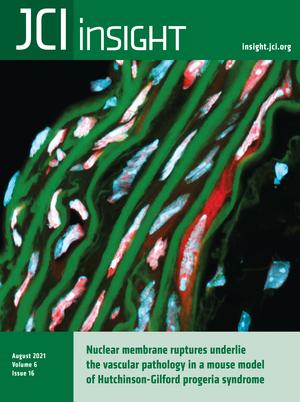
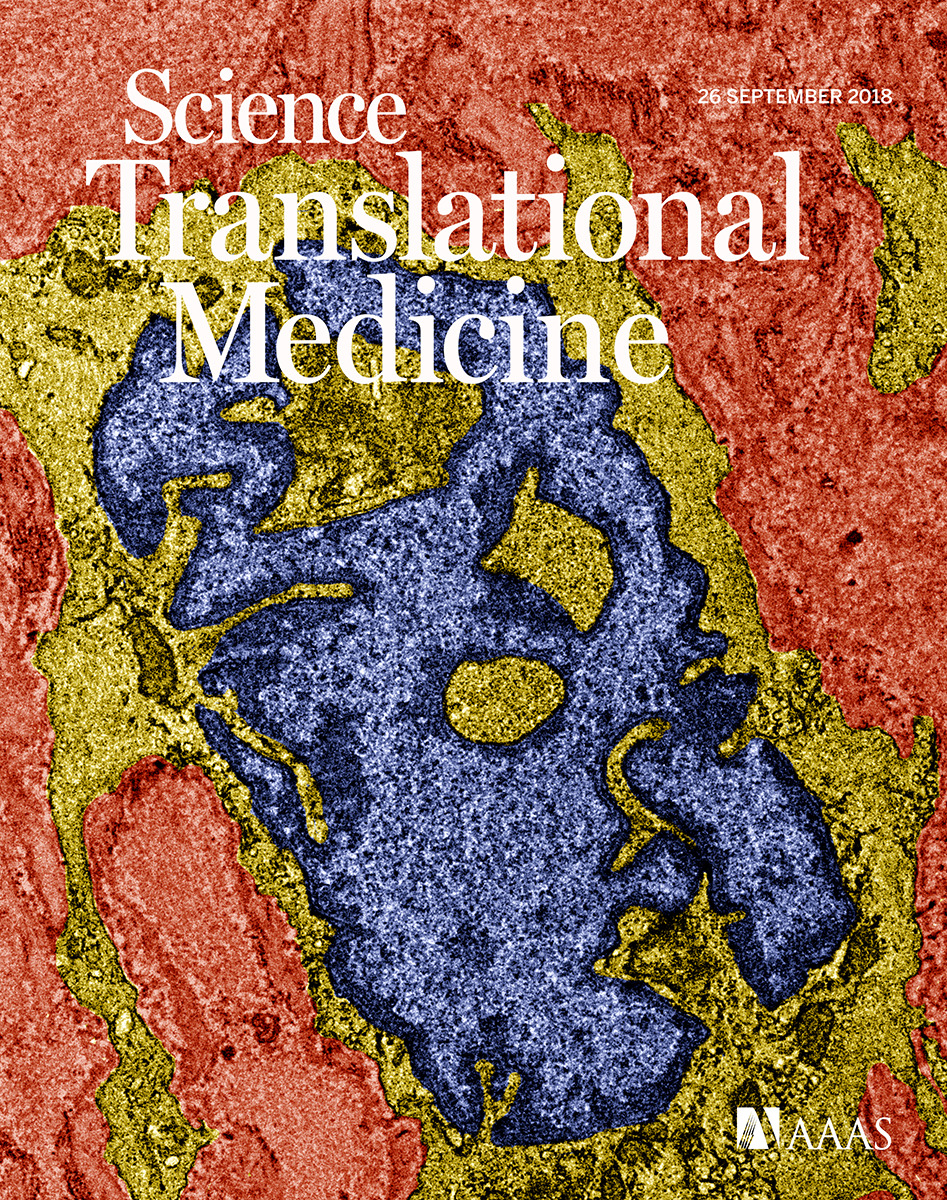
Cover images courtesy of JCI Insight and AAAS / Science Translational Medicine.
About Paul
Scientific depth, broad tools, and a drive to move ambitious questions forward.
I am a bioengineer and cell biologist interested in the mechanisms that make cells—and ultimately tissues—age.
Over a 16-year research career spanning national laboratory, academic, and industry settings, I have built disease models, imaging workflows, multi-omics studies, and functional assays that turn complex biology into measurable evidence.
My work on Hutchinson-Gilford progeria syndrome has focused on the nuclear lamina, nuclear membrane rupture, vascular smooth muscle cell loss, and the search for interventions that can protect cellular function.
Scientific Career
DuPont · Nemours · UCLA · Sandia National Laboratories