Publications · Cell Death & Disease 2025 · First author
The accumulation of progerin underlies the loss of aortic smooth muscle cells in Hutchinson-Gilford progeria syndrome
Connected progressive progerin accumulation in the aorta to the selective loss of the smooth muscle cells that protect arterial structure.
The question
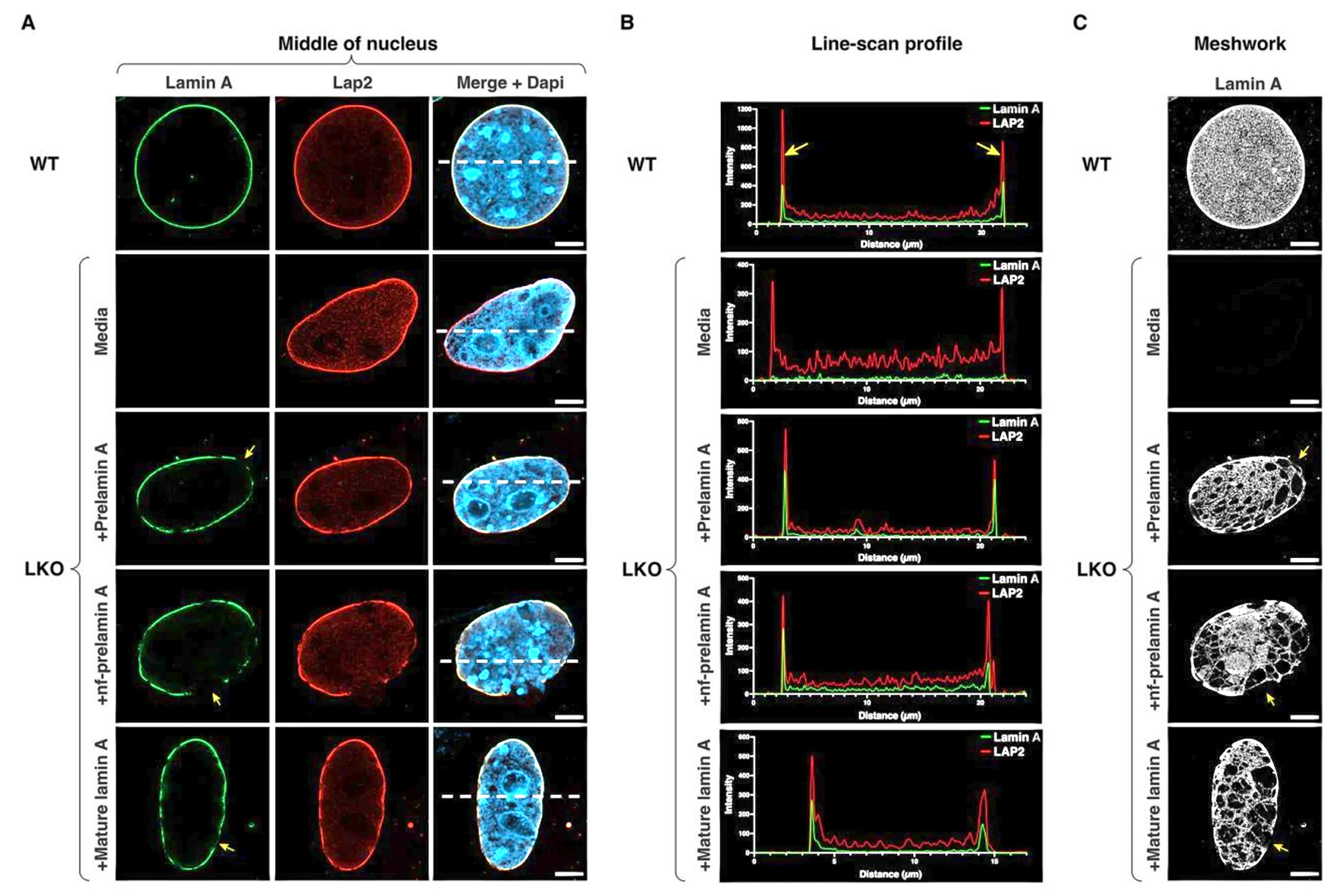
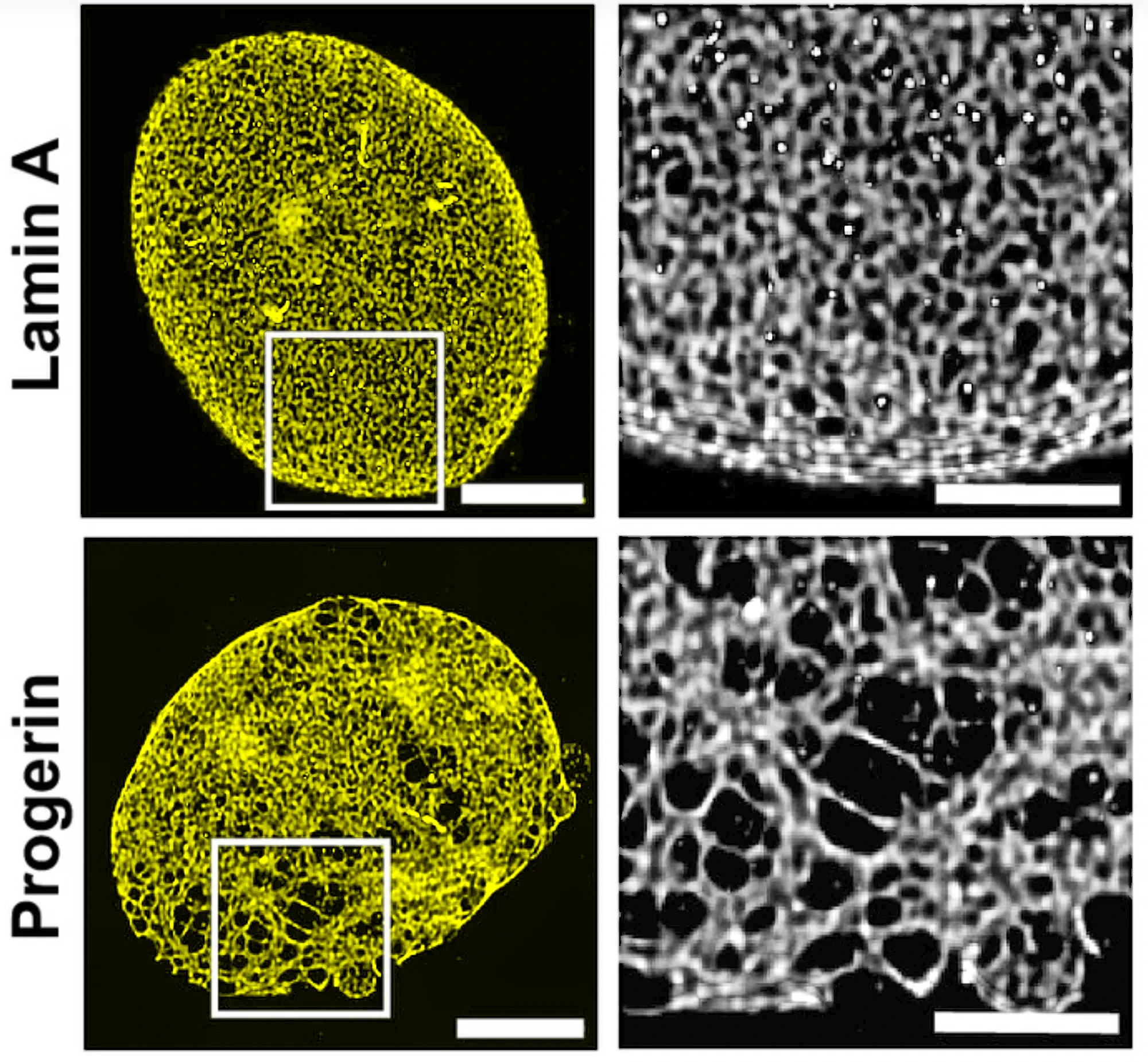
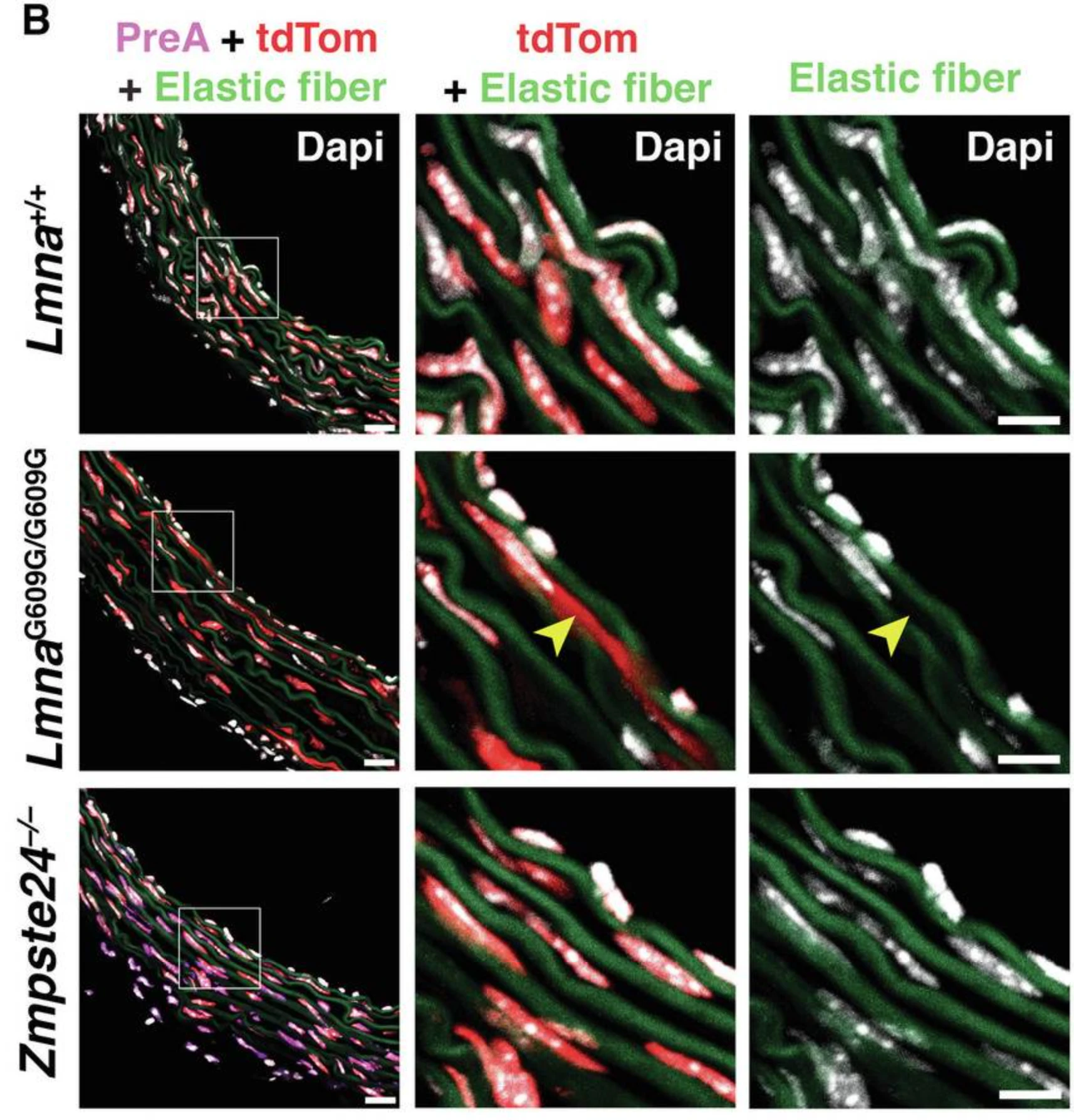
Progerin, the protein that causes progeria, and a closely related protein, farnesyl-prelamin A, damage the nucleus equally in cultured cells. Yet only progerin destroys the smooth muscle cells of the aorta in mice. Why?
What we found
- In young mice, the two proteins are present at the same levels in the aorta.
- Progerin builds up steadily with age, while farnesyl-prelamin A stays level or falls.
- Forcing much higher prelamin A production does cause smooth muscle cell loss, so the amount of the toxic protein is what matters.
- AKT activity, which helps clear prelamin A, is lower in progeria aortas, consistent with slower breakdown of progerin.
Why it matters
The arterial disease that kills children with progeria is driven by progerin slowly accumulating in the aorta, which points to lowering progerin levels or speeding its turnover as treatment strategies.
The accumulation of progerin underlies the loss of aortic smooth muscle cells in Hutchinson-Gilford progeria syndrome. Cell Death & Disease (2025). doi:10.1038/s41419-025-07853-0